


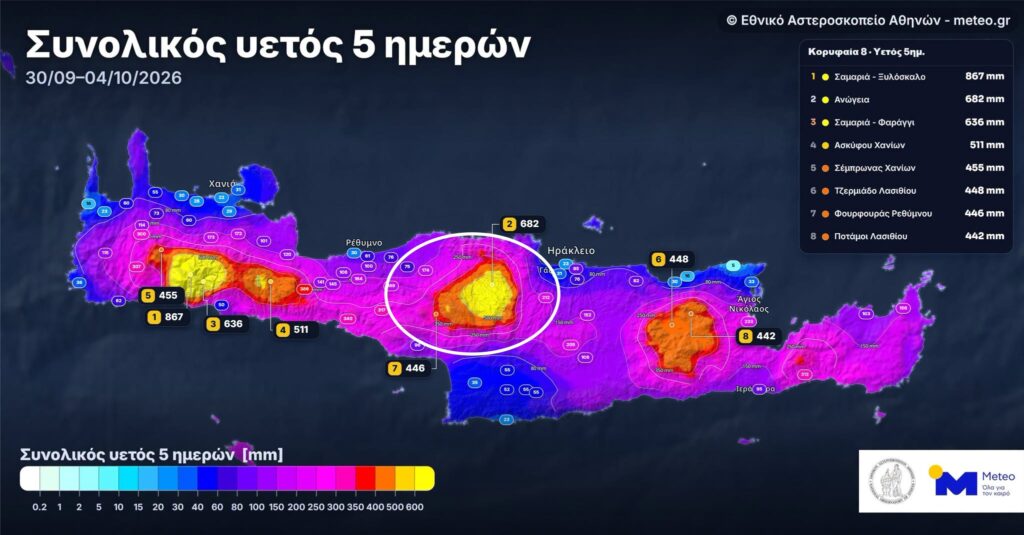
A week has already passed since the devastating floods that struck Crete between September 30 and October 4, with Psiloritis Geopark finding itself literally in the eye of the storm.
In the first 24 hours alone, areas such as Anogeia received 340 millimeters of rain, while a total of 682 millimeters was recorded in the same area over the five-day period of severe weather. It is worth noting that the region's average annual precipitation is 850 millimeters! At a station located slightly higher up, at an altitude of 1,050 meters, 1,150 millimeters were recorded. Many parts of the Geopark—such as Zoniana (which was hit the hardest), Axos, Veni, Platania, Fourfouras, Sarchos, and Kitharida—experienced flooding and extensive damage to the network of forest and rural roads. Damage to sewage and water supply systems caused significant problems in areas within the municipalities of Mylopotamos and Anogeia.
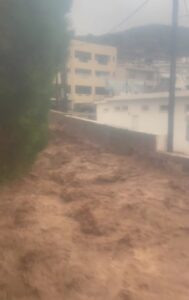
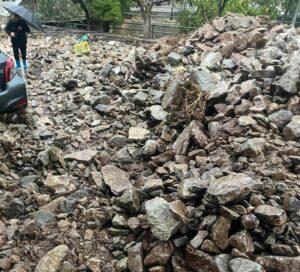
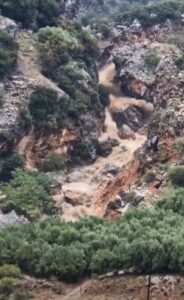
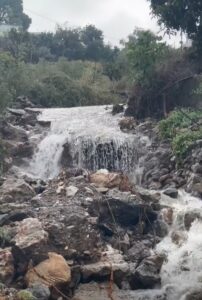
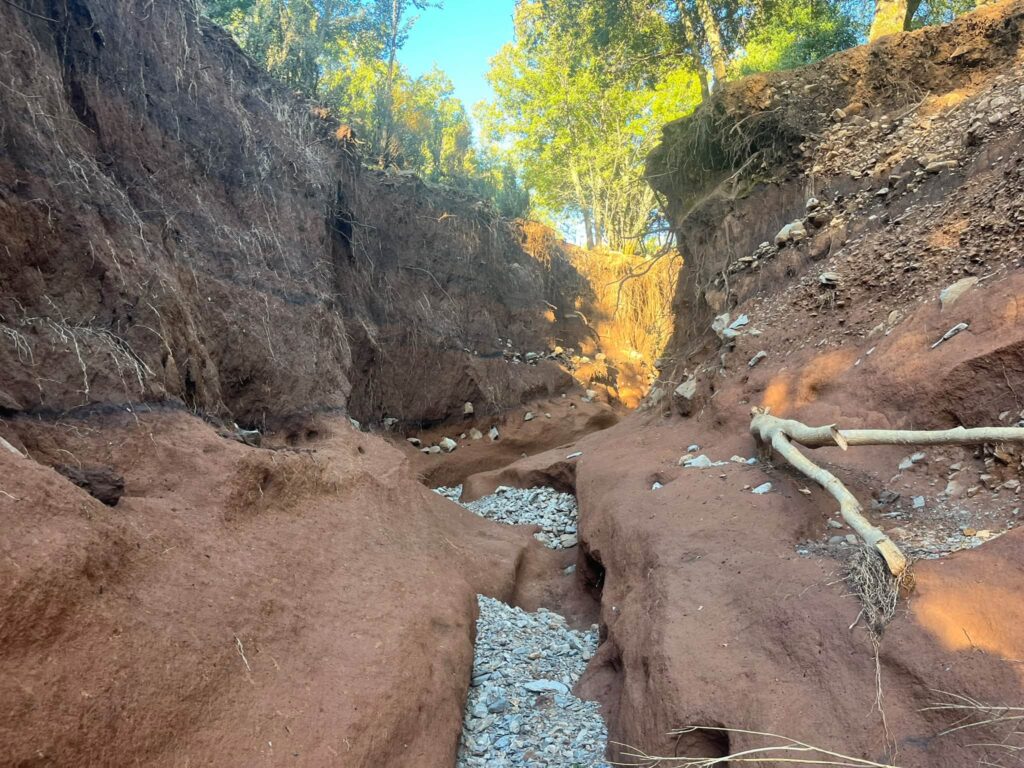
The weather event was extreme and exceptionally rare—both for the season and for the island—though certainly not the first of its kind. The massive amounts of rainfall that fell in such a short time had numerous other collateral effects that are gradually coming to light. Unfortunately, many lambs were born in the mountainous zone during the severe weather; most either drowned or succumbed to the harsh conditions. Many livestock enclosures remained inaccessible for days, making it impossible to assess losses or care for the animals. The olive harvest season is fast approaching, yet many olive groves are currently inaccessible by road. The vast quantities of accumulated debris revealed the severe erosion that occurred in the mountainous zone. Images captured by local residents highlight the extent of the problem: massive rills and gullies, the opening of old sinkholes, deep ravines—with some old streambeds scoured to depths exceeding four meters—and trees left with their roots exposed to the air. This loss of soil in areas with sparse vegetation will exacerbate the risk of desertification in the future.

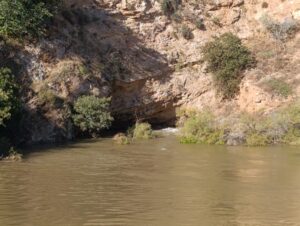
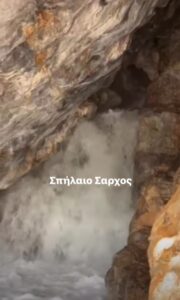
Local geodiversity played a crucial role in mitigating the impact. The rocks of Psiloritis—predominantly limestone and marble—absorbed water like a sponge, thereby significantly reducing surface runoff and the accumulation of large volumes of water in the streams. Within twenty-four hours, this groundwater reached the springs surrounding Psiloritis; the well-known Almyros spring overflowed, reaching peak discharge rates that, for several days, amounted to 2.5 million tons of fresh water. The Sarchos cave also overflowed. Had these rocks been impermeable, the volume of water flowing through the streams could well have been double.
This phenomenon was, therefore, extreme and rare, yet certainly not the last of its kind. History—such as the great flood in Zoniana in 1950—shows us that, sooner or later, nature will repeat such extreme events. It is our own attitude towards them that determines their impact and the potential for destruction. Unfortunately, the solutions available to us are neither numerous nor easy. The simplest course of action is to protect ourselves when such events occur and to avoid exposing ourselves to danger. From a technical standpoint, small mountain check dams prevent the accumulation of debris in watercourses, as well as the buildup of high flow velocities and large water volumes that would otherwise cause erosion and flooding. Naturally, clearing water channels so that the flow encounters no obstacles and drains rapidly, also effectively mitigates these problems.
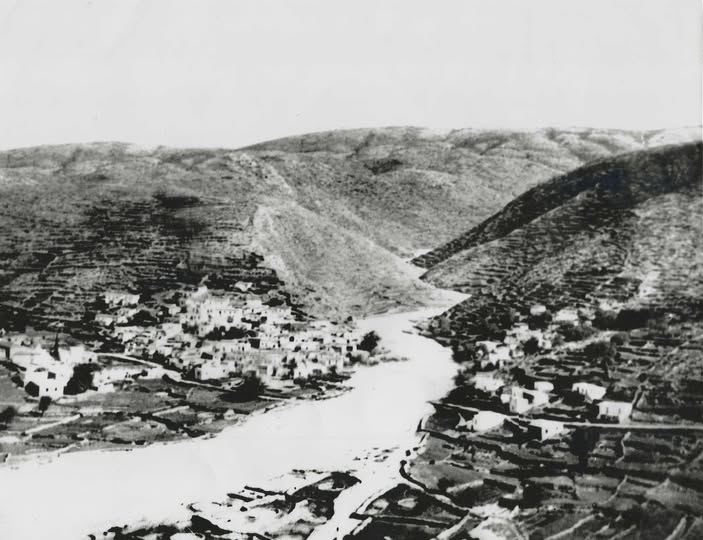
Image Sources:
-Total precipitation 30/9/2026- 4/10/2026- National Observatory of Athens- meteo.gr
-Ζωνιανά | Zoniana: φωτογραφίες από τα κοινωνικά δίκτυα των Γ. Παρασύρη & Μ. Παρασύρη | pictures from the social media of G. Parasiris & M. Parasiris
-Αξός | Axos: φωτογραφίες από τα κοινωνικά δίκτυα του Α. Δαφέρμου | pictures from the social media of A. Dafermos
-Οροπέδιο Κορίτσι | Koritsi plateau: Σ. Κεφαλογιάννης | S. Kefalogiannis
-Πηγή Αλμυρού | Almyros spring: Χ. Φασουλάς | Ch. Fassoulas
-Σάρχος | Sarchos: φωτογραφία από τα κοινωνικά δίκτυα του Γ. Παρασκευά | picture from the social media of G. Paraskevas
-Ζωνιανά | Zoniana- 1950: Ιστορικό Μουσείο Κρήτης | Historical Museum of Crete